
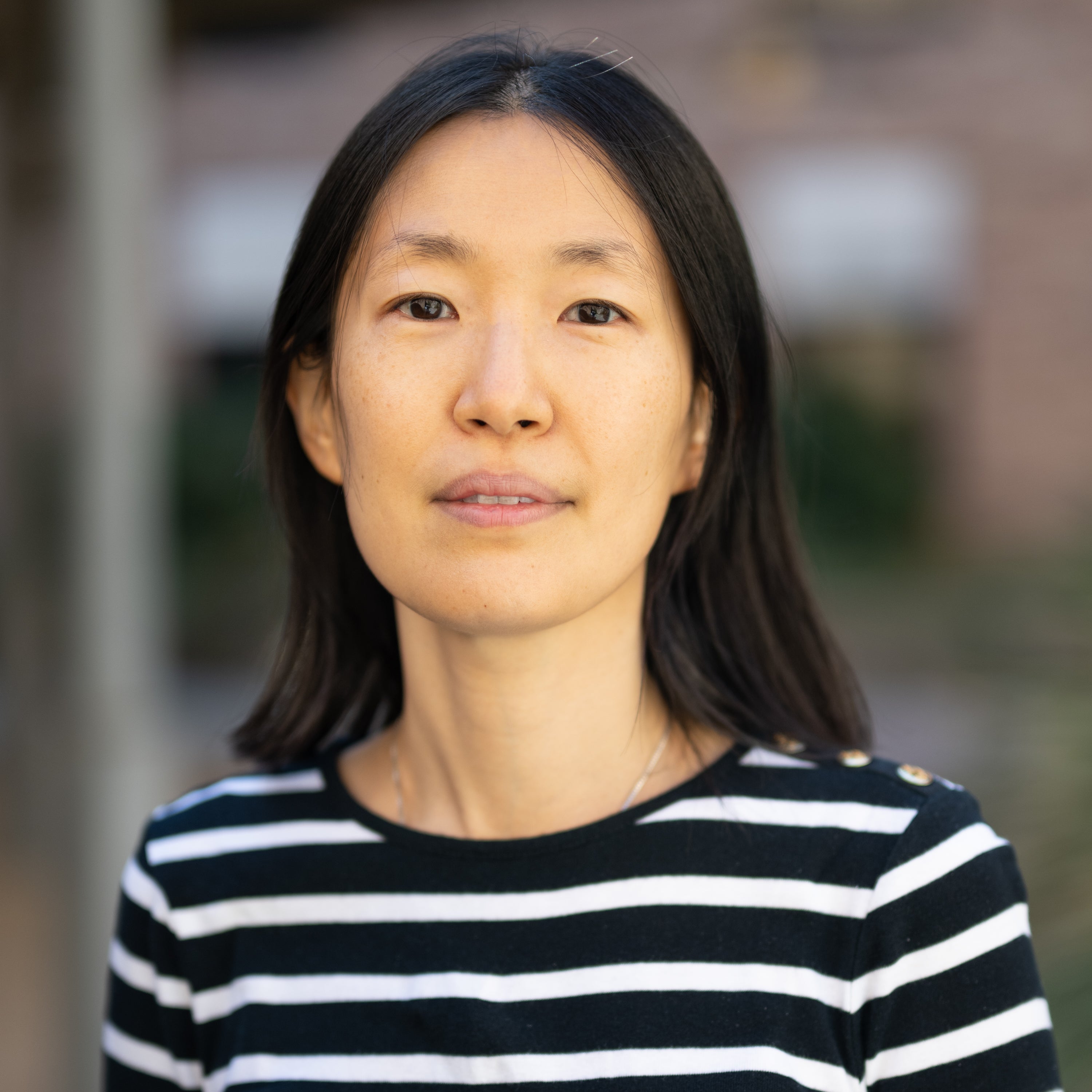
Goheun Kim
- Assistant Professor of Instruction
- Biology Instructional Office
- Molecular Biosciences
Contact Information
Biography
I began teaching at the University of Texas at Austin in Spring 2016 by organizing a research stream within the Freshman Research Initiative (FRI). My postdoctoral advisor, Dr. David Stein, supported my interest in teaching by allowing me to supervise a small group of students on a research project I initiated in his laboratory.
Combined with my graduate teaching assistantship, this unique experience working closely with undergraduates laid the foundation for my educational career. Since then, I’ve had the privilege of teaching Genetics and an introductory biology course to a diverse range of student populations as an instructor in the Biology Instructional Office.
I continuously strive to enhance course organization, content, delivery, and assessment by incorporating innovative teaching strategies, evidence-based practices, and technology-driven solutions. I also prioritize flexibility and affordability in course materials to support student success.
I am passionate about guiding students in their career journeys by sharing research and internship opportunities and offering career resources and mentorship. These efforts have led to increased student engagement, improved learning outcomes, and greater career readiness, as reflected in course evaluations and student feedback.
Through active participation in departmental and college-level committees, I have contributed my skills, experience, and teaching perspective to initiatives that promote student learning and support departmental goals. I look forward to continuing to grow as an educator through professional development, mentorship, and collaboration with the inspiring colleagues and mentors I’ve encountered at the University.
Research
I studied body patterning in Drosophila, focusing my doctoral research on post-transcriptional gene regulation critical to oogenesis. During my postdoctoral work, I began investigating a key signaling pathway involved in early embryonic development. Drosophila serves as a powerful genetic model for studying conserved molecular mechanisms and fundamental biological processes.
I currently have two ongoing research projects aimed at investigating how spatially regulated proteolysis contributes to the establishment of dorsal-ventral (DV) patterning in Drosophila embryos. The first project aims to elucidate the function and regulation of a protease called Gastrulation Defective (GD) by mapping its cleavage site(s) and assessing the ability of various deletion mutants to support DV patterning. The second project focuses on identifying proteins that interact with GD using a technique called proximity labeling, with the goal of discovering novel proteins or interactions critical for localized protease activity and receptor activation during embryonic development.
Fields of Interest
- Cell and Developmental Biology
Education
- Ph.D. in the Cell and Molecular Biology Graduate Program, Department of Molecular Biosciences, The University of Texas at Austin
- B.S. in Biology (Option: Cell and Molecular Bio) with high honors, College of Natural Sciences, The University of Texas at Austin
Publications
Stevens LM, Kim G, Koromila T, Steele J, McGehee J, Stathopoulos A, Stein DS. 2021. Light-dependent N-end rule-mediated disruption of protein function in Saccharomyces cerevisiae and Drosophila melanogaster. PLoS Genetics
Irizarry J, McGehee J, Kim G, Stein D, Stein D and Stathopoulos A. 2020. Twist-dependent ratchet functioning downstream of Dorsal revealed using a light-inducible degron. Genes & Development
Kim G, Pai C, Sato K, Person MD, Nakamura A and Macdonald PM. 2015. Region-specific activation of oskar mRNA translation by inhibition of Bruno-mediated repression. PLoS Genetics